


When Best of the Best hit No. 1 on Netflix worldwide, it was a major moment for South Asian representation — and for choreographer Joya Kazi, a dream decades in the making.
The coming-of-age comedy, starring Maitreyi Ramakrishnan and Priyanka Kedia, throws viewers into the high-stakes world of collegiate Bollywood-fusion dance, where fierce competition, lifelong friendships and a whole lot of drama collide. But behind the jaw-dropping routines is a culture Kazi knows intimately. Having started her own Hindi Film Dance team, Toofan, at UC Davis 20 years ago, she knows firsthand that the experience is about far more than nailing an eight-count.
“Our niche community has always been spectacular enough for the world stage; the world is just catching up now,” Kazi tells Celeb Secrets.
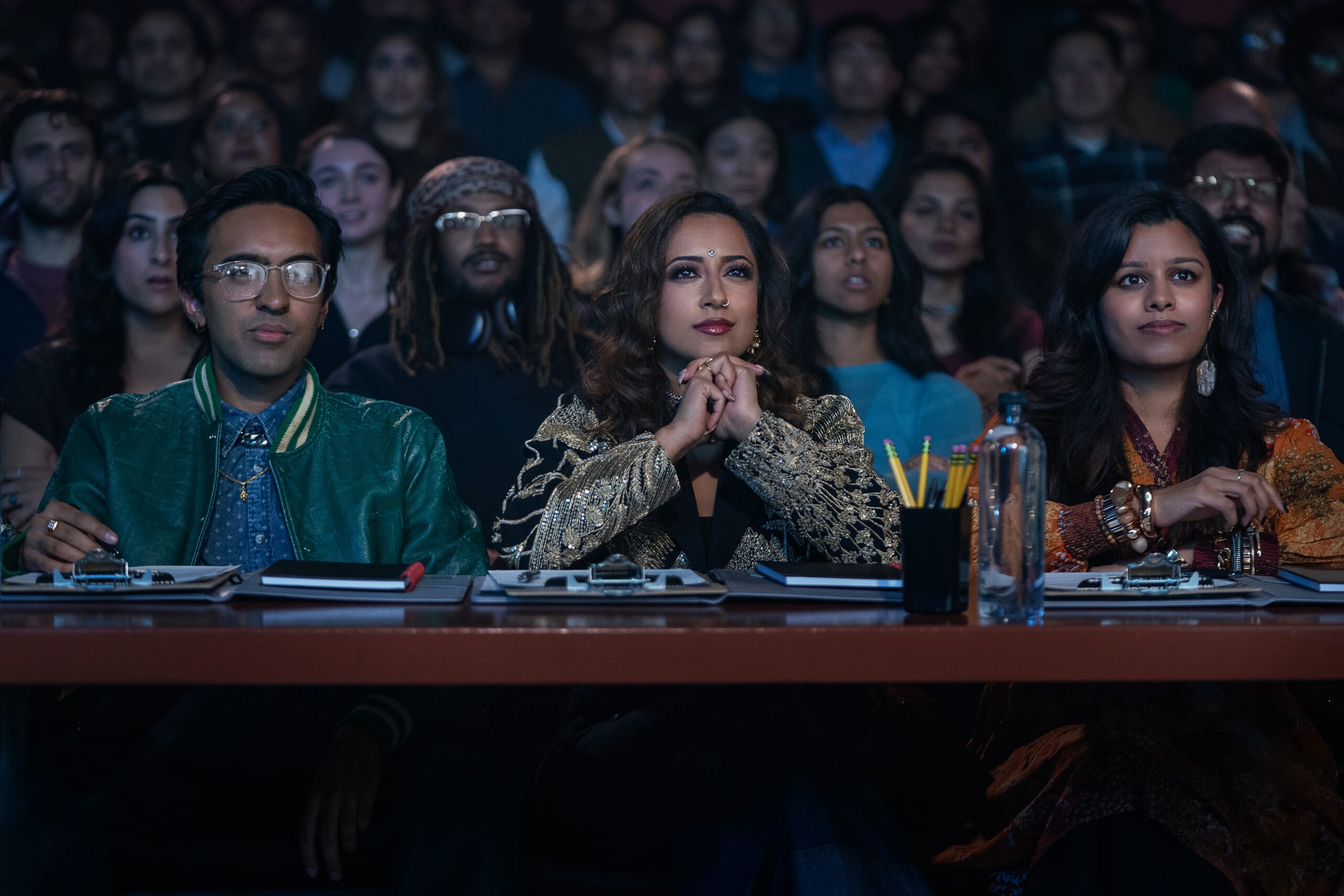
As the film’s co-choreographer and cultural consultant, Kazi helped bring that world to the screen with an eye for every detail, from the fusion of traditional Indian dance styles with hip-hop to the costumes, jewelry and cultural nuances that make the performances feel authentic. She also helped Maitreyi transform into a competitive dancer after months of intensive training — a journey that brought Kazi to tears just one day before filming began.
But perhaps the most meaningful part of the experience had nothing to do with choreography. After years of navigating Hollywood as one of the only South Asian women in the room, Kazi found herself on a production surrounded by creatives who shared her roots, working together to bring their stories to a global audience.
Now, she’s opening up to Celeb Secrets about the emotional full-circle moment, the dance sequence she believes best captures the South Asian-American experience, Maitreyi’s transformation, and why aspiring creatives should focus on building their skills rather than chasing viral fame. Because for Kazi, Best of the Best isn’t just a dance movie — it’s proof that the culture, talent and stories she’s spent her career championing deserve the spotlight.
Keep scrolling to read our full Q&A with Kazi below, and don’t forget to let us know if you loved watching Best of the Best by either leaving a reaction at the bottom of the post or by sliding into our DMs on Instagram at @celebsecrets.
Celeb Secrets: You’ve said, “Never in a million years did I think that something about our niche world would ever be for the masses.” Now that Best of the Best is actually #1 on Netflix worldwide, what does it feel like to watch something you once considered a niche community become a global conversation?
Joya Kazi: “It feels incredibly surreal, with a mix of immense pride and a deep sense of responsibility. Mostly, it feels like validation. For years, the collegiate Bollywood circuit was our beautiful, chaotic secret. We practiced in parking lots at 1 AM, hand made props and costumes, and poured our hearts into these sets just for each other. To see those same exact struggles, friendships, and specific sub-genres of South Asian dance amplified on a global platform like Netflix proves what we always knew in our hearts: our niche community has always been spectacular enough for the world stage; the world is just catching up now.”
CS: You actually started a Hindi Film Dance club at UC Davis, so Best of the Best hits pretty close to home. What parts of the movie do you think really portrayed what it’s really like to be on a college Bollywood dance team”?
JK: “The movie nails the fact that the competitive dance circuit is a pressure cooker for self discovery. It’s less about mastering dance technique and more about mastering human connection through leadership, understanding, and resilience. Competition audiences would see our 7-minute routines, but behind the scenes was a masterclass in learning how to manage different personalities, handle devastating losses, and hold yourself accountable. I started my team, Toofan, 20 years ago and those years formed the basis of how I move through the industry today. Best of the Best truly portrays how you may walk in to join a team as a dance outlet, but you walk out with the foundational blueprint for how you handle the rest of your life.”
CS: Maitreyi Ramakrishnan went through four months of training — six classes a day, six days a week. Do you remember the moment where she wasn’t a dancer anymore but becoming one?
JK: “We were in the studio rehearsing her finale museum dance solo that happens in silence. It was the day before we began filming and I cried tears of joy at how beautifully I felt Maitreyi had embodied the movement. It was like she was no longer thinking about the moves, and they were just flowing from her. I quickly filmed and sent a demo to our director, Lena Khan, and she messaged me back saying ‘Oh my God, Maitreyi is beautiful. I think I might cry! You taught her a soft flow that’s outside of her instincts.’ I texted back that I cried in the studio with a bunch of crying emojis and she said, ‘What a beautiful job you’ve both done. I’m crying now! She looks like a dancer.'”
CS: You were both the choreographer and cultural consultant, which means you weren’t just making the dances look incredible. What did you do to make sure that everything in the film was as authentic and as culturally right as possible?
JK: “When something goes from a tight-knit subculture to a global conversation, there’s a risk of it being diluted, misrepresented or misunderstood. I didn’t want the world to just see the dancing. I wanted them to see the soul of the circuit and the culture. I made sure that anytime classical dance was performed, it was done respectfully with barefeet. I consulted on hair, makeup, jewelry, and costumes helping source pieces and offering knowledge wherever I can; like the difference between ghungroos (dance bells) for Kathak vs. Bharatnatyam, why a Pakistani ‘jhumar’ can’t be added to a classical Bharatnatyam look, that ‘maang tikkas’ are not just traditional jewelry, but also modern, and even how to pleat a dupatta in various styles.
Lena, Hasan & Prashant involved me in the casting process early on and I did whatever was humanly possible to ensure we searched high and low for South Asian talent for the cast and dance crew. Even if it meant re-pitching someone two or three times, I wanted to put my best foot forward in ensuring everyone had a fighting chance at getting into the room. I loved working with our music supervisor, Kier Lehman, who welcomed my suggestion to use ‘Addictive’ with Kaliyon ka Chaman. At one point I was reciting Indian classical rhythms to him over the phone as I was driving through New Jersey traffic. Lena was an open door of communication and collaboration with my ideas from meaningful artwork for the museum displays such as Raja Ravi Verma’s painting ‘Woman Holding a Fruit’ and displays of Patachitra Pots from West Bengal to UT Dallas’s Pakistani dance showcasing some favorite drinks like Limca, Orange Crush and Rooh Afza to neutralize a saloon bar set.
So many things, big and small; even things that may seem too small to go to bat for, but when you are one of the few people entrusted with bringing your culture to a massive global platform, there is an immense pressure and every detail is worth fighting for. That’s also why working with departments that are open-minded and welcome guidance on a culture they’re not from without ego, is imperative to enabling the representation to undeniably hold an authentic and recognizable voice.”
CS: The movie throws everything from classical and folk traditions to Bollywood, bhangra, garba, kuthu and even hip-hop into the mix. If you had to pick ONE dance number that best represents what you wanted audiences to understand about South Asian dance, which would it be and why?
JK: “That is easily UCLA’s SASA performance. You have the multitude of dance forms, Bollywood film easter eggs, the romance, charisma and heroism that make up what is the heart of South Asian dance. You see the creativity and weaving together of dance styles that make the South Asian American voice, the cultural nuances of performing classical dance barefoot, and that whether you dream to be the apple of the star’s eye or the star herself, it’s all possible!”
View this post on Instagram
CS: There are some seriously intense competition numbers in this movie. Be honest: which routine had you thinking that the actors were going to crush the choreography?
JK: “In the process of creating the SASA performance, I worked closely with Ankur, Priyanka and Maitreyi to bring the sequences to life in a way that is quintessentially Bollywood, but also unique to their characters. Through workshopping movement for my favorite section of fusing Kathak with a Bay Area hip hop style (a nod to my own roots), Ronak’s introduction, Maya & Anjali’s dream sequences with the cinematic movement that is a signature of Bollywood’s Golden Age and the dynamic energy of Bhangra, a Punjabi folk dance, I made sure to leave room for the actors to make the movement and the characters their own, and they did! You could see it bubbling to fruition from within the studio, so I knew they were going to knock it out of the park.”
CS: You trained Maitreyi before on Never Have I Ever, and now you got to help transform her into a competitive Bollywood dancer. How different was it watching her go from Devi dancing for fun to Maya having to dance like her championship title depended on it?
JK: “The contrast was like night and day. On Never Have I Ever, we were working under extreme time constraints for any prep. I literally only had about three hours total to create and teach the choreography, and we were squeezing in rehearsals during tiny 10-minute windows as Maitreyi’s makeup was being touched up between scenes. It was an insane turnaround, but Maitreyi has stellar mental memory that fueled her through that shoot. Best of the Best was a completely different beast. Since the training was so rigorous and extended over months, she actually had the time to experience the physical fatigue and the natural frustrations that come with building a competitive dancer’s foundation from scratch. Maya needed to look like an elite competitor, which takes muscle memory, not just mental memory. Having that extra time gave us the opportunity to work through those frustrations with grace. It was so beautiful to watch her training enable her body to finally catch up to how incredibly quick her mind is.”
CS: You actually appear in the movie as a competition judge. What was it like going from being the person behind the choreography to suddenly being on camera?
JK: “I have been judging competitions across this very circuit for more years than I can count, so sitting at that judge’s table felt like I was just playing me! Going from behind a monitor as the choreographer to being on camera in that specific role was incredibly special. I’m deeply honored that production included me in a way that paid homage to my real two-decade history with this community.”
CS: You’ve worked across projects like Never Have I Ever, the Grammys, Disney, DreamWorks and the IIFA Awards, but you’ve described Best of the Best as a moment that had you “holding back tears every day on set.” What made this project hit you differently?
JK: “It was in college that I realized my purpose in my passion: to elevate South Asian dance and talent so Hollywood could see how rich, viable, and powerful our art is in Western entertainment. That has been my North Star since I moved to LA 15 years ago. Back then, I was usually the only brown girl in the room. Opportunities came once in a blue moon, and I was constantly battling stereotypes just to put respect on our community’s name. After we had our first Best of the Best choreography showcase for the production team, Hasan used the Urdu word ‘izzat,’ which means respect. He spoke about how after years of feeling like we don’t belong in the room, we’re finally in it and bringing respect for our culture. The tears just started flowing. Every single day on that set, I was overwhelmed by the immense privilege and responsibility of representing our roots on a production where, for the first time in my Hollywood career, I was surrounded by so many people who looked like me. I never took a single second of it for granted.”
CS: If a kid watches Best of the Best and sees themselves in Maya, Anjali or one of the dancers and thinks, “I want to do THAT,” what do you hope they take away from watching this movie — and what would you tell that future choreographer who’s watching right now?
JK: “I love that in today’s world, they don’t have to explain what Bollywood is anymore or justify why their art matters. They get to walk into a room knowing their culture is already a global conversation, and that is the greatest feeling in the world. My deepest hope is that these kids and their parents can see all the beautiful South Asian actors, dancers, singers, composers, designers and creatives that were a part of this film and realize that a thriving, viable career in the arts is fully possible for them. For all the aspiring choreographers, focus on training, not the timeline. I would say to invest deeply in your knowledge. No one can ever take that away from you and it will grant you longevity in this industry beyond social media numbers, likes and views. Most importantly, remember that social virality will never be a match for skill viability.”